



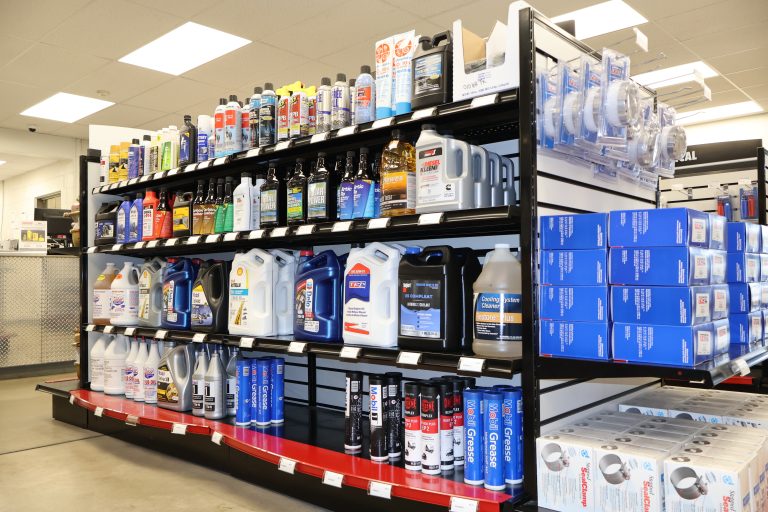
Diesel fuel can be affected by a variety of factors, including temperature changes, moisture, storage conditions, and overall fuel quality. Using the appropriate fuel additives for the season can help maintain fuel quality and support reliable truck performance.
It’s important to remember that not every truck requires fuel additives year-round. Your fuel supplier’s guidance and engine manufacturer’s recommendations should always take priority. Be sure to consult your engine owner’s manual for official fuel specifications and maintenance guidelines.
The information below provides general recommendations on the types of fuel additives commonly used throughout the year, helping you prepare for seasonal changes and operating conditions.
Fall is the time to start preparing for colder temperatures.
As temperatures drop, wax in diesel fuel can form crystals that restrict fuel flow and plug filters. Anti-gel or cold-flow additives are designed to help diesel fuel perform in cold temperatures.
The important thing is timing. Anti-gel products generally work best when added before the fuel begins to gel.
Some fuel treatments also contain cetane improvers, which can support cold starting and combustion.
Cold weather is when fuel treatment becomes especially important for trucks operating in areas with freezing temperatures.
Anti-gel treatments can help improve the low-temperature performance of diesel fuel and reduce the risk of fuel flow problems. Always make sure to follow the product’s recommended dosage and temperature range.
If fuel has already gelled, an emergency de-gel product may be appropriate for some applications. A plugged fuel filter may also need to be replaced.
After a long winter, spring is a good time to focus on fuel system maintenance.
Fuel system cleaners can help remove deposits that are built up in fuel injectors and other fuel system components. Keeping the system clean can support proper fuel delivery and overall engine performance.
Spring is also a great time to check for possible water and contamination in your fuel system. Condensation and moisture can lead to corrosion and other fuel system problems.
Hot summer temperatures may create challenges for fuel that sits for long periods, especially in storage tanks or equipment that is not used regularly.
Using a fuel stabilizer may help maintain fuel quality during extended storage. If water is present in a fuel tank, it can create an environment for bacteria and fungi to grow. This is sometimes referred to as “diesel fuel algae.”
Biocides may be used when microbial contamination is present, but they are not something every truck needs as routine treatment. Addressing water in the tank is also important.
Not necessarily. Modern diesel fuel is already treated to meet fuel specifications, and fuel suppliers may adjust their blends for seasonal conditions.
Before adding an additive, consider your truck’s operating conditions, expected temperatures, fuel type, and storage needs. Also check whether your fuel already contains treatment.
Using more additive does not necessarily provide better results. Always follow the product label and your engine manufacturer’s recommendations.
The right fuel treatment entirely depends on your truck, engine, fuel, operating conditions, and the time of year.
If you are unsure which product is right for your application, our Kenworth of Pennsylvania parts and service teams can help you find the appropriate products and maintenance solutions for your truck.
A little preparation can go a long way toward helping you avoid fuel-related problems when temperatures change.
Find your local Kenworth of Pennsylvania store and get in touch with our team today to learn more.
We use essential cookies and similar technologies to operate, secure, and provide core website features. These technologies remain active because they are necessary for the website to function. With your permission, we also use optional technologies to analyze website traffic, personalize content, and support advertising.
Select Accept All to allow optional technologies, Reject All to use only those necessary for website functionality, or Customize to manage your preferences.
We use cookies to help you navigate efficiently and perform certain functions. You will find detailed information about all cookies under each consent category below.
Necessary cookies are required to enable the basic features of this site, such as providing secure log-in or adjusting your consent preferences. These cookies do not store any personally identifiable data.
Functional cookies help perform certain functionalities like sharing the content of the website on social media platforms, collecting feedback, and other third-party features.
Analytical cookies are used to understand how visitors interact with the website. These cookies help provide information on metrics such as the number of visitors, bounce rate, traffic source, etc.
Advertisement cookies are used to provide visitors with customized advertisements based on the pages you visited previously and to analyze the effectiveness of the ad campaigns.