



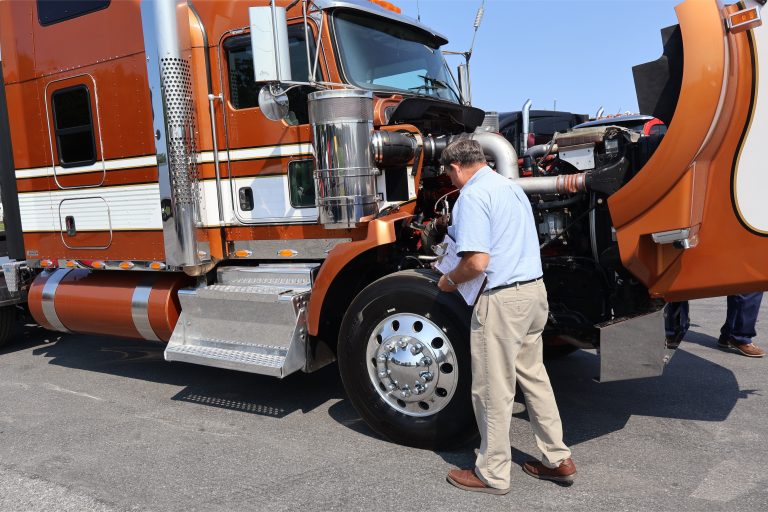
Before every trip, commercial truck drivers are responsible for making sure their vehicle is safe to operate. A Department of Transportation (DOT) pre-trip inspection is one of the most important steps in preventing accidents, avoiding costly breakdowns, and staying compliant with federal regulations. Taking a few minutes to inspect your vehicle before hitting the road can help identify issues before they become serious safety hazards.
A DOT pre-trip inspection is a visual and functional inspection of a commercial motor vehicle conducted before driving. The purpose is to verify that the vehicle is in safe operating condition and that no defects or mechanical issues could affect its safe operation.
For truck drivers, pre-trip inspections are more than just a best practice. According to 49 CFR 396.13 Driver Inspections, The Department of Transportation requires drivers to be satisfied that key vehicle systems are functioning properly before operating a commercial vehicle. It is also mandatory that drivers review the previous driver’s vehicle inspection report, when applicable, and verify that any identified defects have been repaired or are not severe enough to impact safe operation.
A pre-trip inspection should be completed prior to the vehicle leaving the yard, terminal, or jobsite. Most drivers use a consistent walk-around method, inspecting the truck from front to back and checking both the tractor and trailer exteriors and interiors.
During the inspection, look for signs of damage, wear, leaks, loose components, or anything that could potentially pose a safety risk. If a defect is discovered, it should be reported and fixed before the vehicle is operated.
A DOT pre-trip inspection should include the following:
Pre-trip inspections are more than a regulatory requirement. They are one of the most effective ways to improve safety and reduce risk out on the road. Identifying problems before a trip can help prevent accidents, minimize downtime, avoid out-of-service violations, and reduce unexpected repair costs.
When drivers make pre-trip inspections part of their daily routine, they help create a stronger culture of safety while keeping vehicles compliant and operating efficiently.
For additional information on commercial vehicle safety and inspection requirements, please visit the Federal Motor Carrier Safety Administration website: https://www.fmcsa.dot.gov/.
We use essential cookies and similar technologies to operate, secure, and provide core website features. These technologies remain active because they are necessary for the website to function. With your permission, we also use optional technologies to analyze website traffic, personalize content, and support advertising.
Select Accept All to allow optional technologies, Reject All to use only those necessary for website functionality, or Customize to manage your preferences.
We use cookies to help you navigate efficiently and perform certain functions. You will find detailed information about all cookies under each consent category below.
Necessary cookies are required to enable the basic features of this site, such as providing secure log-in or adjusting your consent preferences. These cookies do not store any personally identifiable data.
Functional cookies help perform certain functionalities like sharing the content of the website on social media platforms, collecting feedback, and other third-party features.
Analytical cookies are used to understand how visitors interact with the website. These cookies help provide information on metrics such as the number of visitors, bounce rate, traffic source, etc.
Advertisement cookies are used to provide visitors with customized advertisements based on the pages you visited previously and to analyze the effectiveness of the ad campaigns.